October 21, 2026
Category: Hot Tub
Successful garden Jacuzzi installations rarely feel separate from the landscape around them. Position is the first clue, especially in relation to the house. Material choices then determine whether the spa feels integrated or introduced later.
A garden Jacuzzi therefore works best when its position is settled before the surrounding landscape is finished. The view from the house should make sense, while the spa needs enough room for everyday use and future servicing. Resolving those details early allows paving, planting and screening to develop around a known installation rather than having to accommodate it later. By autumn, the result becomes easier to judge as earlier darkness brings lighting into focus and thinner foliage can expose privacy issues that summer planting concealed.
At The Hot Tub and Swim Spa Company, we help homeowners assess Jacuzzi models against the garden they are planning, from overall dimensions and access to cover movement, servicing and installation requirements. Where a garden designer or landscaper is already involved, our team can provide the spa-specific information needed before the surrounding scheme is fixed.
Where should a garden Jacuzzi sit within a landscaped garden?
Spare space is rarely the right starting point when choosing a position. A garden Jacuzzi has considerable visual weight, so its scale needs to feel comfortable beside the terrace and the architecture of the house, with enough garden left around it. A location that looks generous on a plan can feel much tighter once steps, cover movement and everyday access are taken into account.
Daily movement through the garden offers a better starting point. A position within easy reach of the house often feels more inviting without interrupting the main way through the garden. On a colder evening, a few extra metres from the back door can feel surprisingly significant. Proximity is not everything, though, particularly if the spa would be exposed or sit directly on a dominant view.
Space around the spa matters just as much. Crowding it with other features can make the area feel busier than intended. Rather than hiding the Jacuzzi, the goal is to find a position that works from more than one viewpoint. The most important of those may be the one you see every day from inside the house.
How should the view from the house influence the Jacuzzi position?
Much of the time, the hot tub will be seen rather than used. Before committing to its position, it is worth looking through the doors and windows that face the garden.
Placed directly on a strong sightline, a Jacuzzi may become the first thing you see every day, even when it is covered. In some gardens that feels completely natural. Elsewhere, shifting it slightly to one side allows the terrace, planting or architecture to retain more of the view.
Equally important is how the spa looks when covered. A position that looks beautiful while the hot tub is in use may be less convincing once the cover is back on. Cabinet colour and the materials immediately around the spa can make a noticeable difference here. Nearby planting can soften the view further, provided it does not interfere with access.
Seasonal change matters too. As deciduous planting thins, a view that felt private in July may become much more open. Noticing that before the layout is fixed makes it easier to build privacy into the garden rather than adding it later.
Where the proportions of a standard hot tub begin to dictate too much of the view, a bespoke option can offer greater freedom. Our bespoke tiled hot tubs can be tailored in size and layout, giving more scope to work with a particular terrace, sightline or architectural setting rather than asking the garden to adapt around a fixed model.
How can materials and planting integrate a garden Jacuzzi?
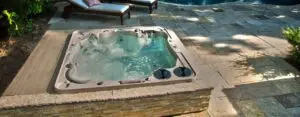
Material continuity can do much of the visual work. Repeating a paving tone, timber detail or architectural finish already used on the house or terrace can make the Jacuzzi feel connected to what is around it.
Perfect matching is unnecessary. A change in texture can give the spa its own setting, provided the transition feels deliberate. Appearance is only half of the decision. Surfaces around the water need to suit outdoor use, and the layout still has to leave enough room to move comfortably and handle the cover.
Used carefully, planting can soften the presence of the Jacuzzi and create privacy. Its eventual size matters more than how it looks when first planted. Dense growth immediately beside service panels may seem effective at first and become frustrating later.
A little distance usually helps. Planting can frame the spa while leaving the equipment side clear enough for servicing. Screens benefit from similar restraint, creating privacy without making the area feel boxed in.
How should privacy and lighting be planned around a garden Jacuzzi?
Privacy tends to feel more natural when it comes from several parts of the garden rather than one tall screen beside the water. Existing boundaries and established planting may already provide much of the privacy, so only the most exposed sightlines need additional screening.
Once daylight disappears, lighting starts to shape the experience as much as the planting does. The route from the house needs enough light to feel comfortable after dark, while illumination immediately around the spa can be much softer. Light aimed directly towards the water may create glare, particularly when you are sitting in the spa or looking out through glazing.
By October, these decisions become easier to judge because the garden is already dark during normal evening use. A softly lit route can draw the eye from the house towards the spa without turning the Jacuzzi into a display feature.
Night-time privacy deserves a separate check. Interior lighting changes reflections in the glazing, while outdoor light can reveal parts of the garden that felt secluded during the day.
What needs to be planned before the landscaping is finished?
A beautiful position still has to work technically. Knowing the model early enough allows its dimensions, cover movement and access requirements to influence the surrounding layout. Delivery is also easier to plan before new walls, gates or established planting make the route into the garden more difficult.
Resolving the base and electrical requirements before finished paving or decking is laid can prevent avoidable changes later. Drainage also needs to suit the particular site and installation. Sorting these details early reduces the risk of lifting finished surfaces or rethinking part of the garden once work is under way.
Future servicing deserves the same attention. Screening, raised beds or built-in seating can look elegant beside a hot tub, but the finished design still needs to leave enough room for an engineer to reach the equipment when required.
Once a likely position has been identified, our team can help compare the practical requirements of different Jacuzzi hot tubs against the proposed space. Narrowing the choice gives the landscaper real dimensions and access requirements to work with before hard landscaping is fixed.
How can the right Jacuzzi model support the finished landscape?
Two hot tubs with a similar footprint can still sit very differently in the same garden. Cabinet finish and overall height affect how prominent the spa appears, while the seating layout may influence which side you naturally approach from.
Once two or three models are under consideration, compare them against the garden rather than only against each other. A cabinet that recedes quietly beside one terrace may feel much more prominent in another, while approach direction and cover movement can change how the installation occupies the space.
At our Gillingham and Pembury showrooms, you can compare Jacuzzi models in person and discuss the dimensions and practical requirements of the space you are planning. Your garden designer or landscaper shapes the wider scheme. Our role is to help make sure the chosen hot tub can work comfortably within it.
One useful final test is how the garden looks when the Jacuzzi is covered and nobody is using it. If the route from the house still feels natural and the surrounding materials still belong with the wider garden, the setting is likely to feel considered throughout the year.
Autumn often makes those final details easier to see. Earlier darkness brings the lighting into focus, while thinner foliage can expose sightlines that seemed perfectly convincing in summer.
If a Jacuzzi is already part of your garden plans, it is worth confirming the model and its practical requirements before the surrounding scheme is fixed. A conversation with our team can help establish which models suit the available space and identify the installation details your landscape designer or contractor may need to accommodate.